
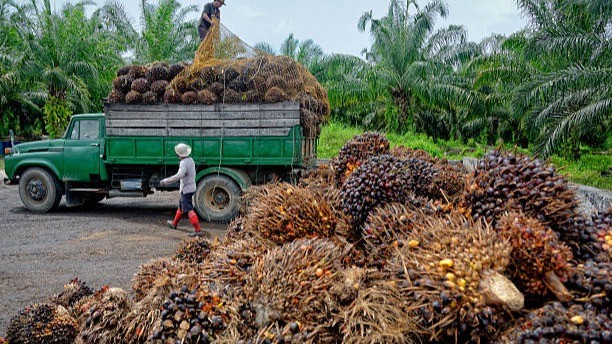
Walk through any Nigerian market today and you’ll see bottles of palm oil and vegetable oil stacked high, their golden hues catching the light. These are staples in every kitchen, from Lagos to Kano. Yet behind those bottles lies a much bigger story, one that touches on Nigeria’s foreign exchange reserves, food security, and the struggles of families facing rising prices.
Cooking oil is no longer just a household concern; it’s an economic battleground. Nigeria consumes over 1.4 million metric tonnes of vegetable oil annually, but domestic production falls short. The gap is filled by imports worth billions of naira each year, draining foreign reserves and leaving the economy exposed to global price shocks. Whenever international markets swing, whether due to disruptions in Malaysia, Indonesia, or Ukraine Nigerian households feel it almost instantly in the price of cooking oil.
The government has tried to push import substitution, naming palm oil and vegetable oil as priority crops. But declarations alone don’t solve the problem. The real bottleneck lies in the “messy middle” of the supply chain: fragmented farmer networks, inconsistent yields, poor rural roads, and the absence of real-time market data.
Nigeria isn’t short of land or farmers willing to grow oil palm or soybeans. Smallholders make up most of the supply, but processors can’t depend on them consistently. Many farmers are scattered across remote areas with no system to track volumes, quality, or delivery. Transport is expensive because processors don’t know the most efficient routes or where farmer clusters are. Without solid yield and supply data, financiers hesitate to commit capital. The result is a cycle where processors run below capacity, farmers earn less, and Nigeria keeps importing what it could produce.
At its core, this is not just a production problem. It’s a data problem. Processors need visibility into who is growing what, where, and when. Investors need feasibility data to de-risk billion-naira projects. Policymakers need accurate, up-to-date information to make better decisions. Farmers need to know market prices so they can plan and negotiate fairly. Without reliable data, the entire cooking oil value chain operates in the dark, leaving billions of naira on the table.
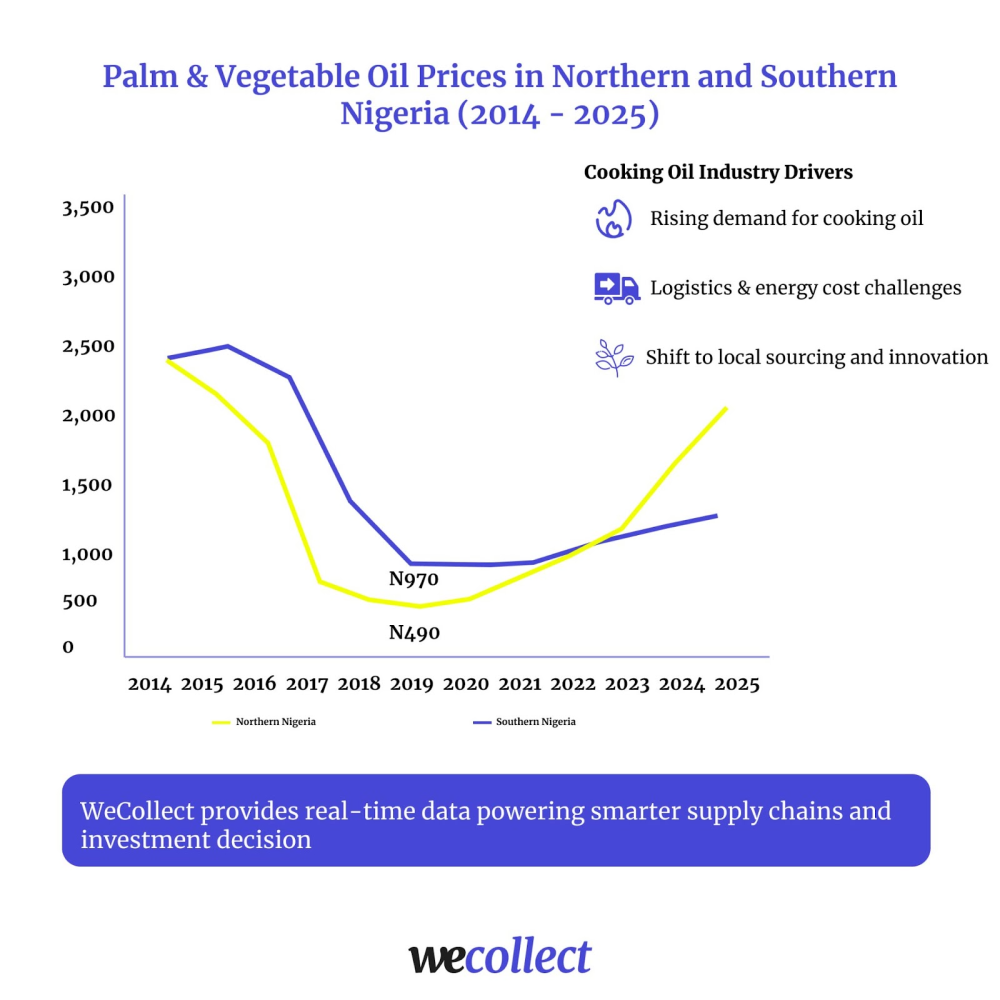
Data is missing and it can transform Nigeria’s cooking oil sector. By geotagging oil palm and soybean farmers with GIS, processors can identify clusters and reduce transport costs. Digital monitoring of farmer deliveries can improve supply chain efficiency and help processors forecast output. Price intelligence offers visibility into regional differences and market volatility. In fact, WeCollect has been tracking food prices across Nigeria for years, including cooking oil, creating one of the most reliable datasets on how prices move across states and over time. That intelligence helps businesses make smarter sourcing decisions and gives investors the confidence they’re working with verified, real-world numbers.
The impact of better data goes beyond spreadsheets. Imagine a smallholder farmer in Edo State who finally knows the true price of palm oil in his region and can sell at fairer rates. A processor in Kano running closer to full capacity because trucks are routed more efficiently. An investor in Lagos committing capital because they have reliable yield forecasts. When data flows, everyone benefits: farmers earn more, processors run smoother, investors deploy capital with confidence, and consumers pay less for a bottle of oil.
That’s where WeCollect comes in. We’ve built Africa’s most efficient field data collection and project management platform, designed for the realities of doing business here. Our trained field agents are present in all 774 LGAs in Nigeria. Our GIS and AI tools allow geotagging, validation, and real-time project tracking. And our flagship service, Data On-The-Go, delivers verified datasets within 72 hours, making it possible for companies to respond to market changes almost instantly.
For cooking oil producers and investors, this means no more guesswork. You know where to source, how much it will cost, and where to invest with confidence. The story of Nigeria’s cooking oil is about more than food; it’s about saving billions in forex, strengthening local industries, and securing food supply for the future. With the right data, Nigeria can shift from importer to self-sufficient producer, even exporter.
The tools exist. The demand is here. The question is whether businesses and policymakers will embrace data as the foundation for the transformation Nigeria urgently needs.
At WeCollect, we believe the future of cooking oil in Nigeria depends on one thing: visibility. And visibility comes from data. If you’re a processor, investor, or policymaker ready to localize production and cut Nigeria’s import bill, let’s talk. Together, we can build the data backbone that powers smarter supply chains, stronger businesses, and a more resilient economy.
If you are trying to make better decisions with better data, we’d love to support you.
