
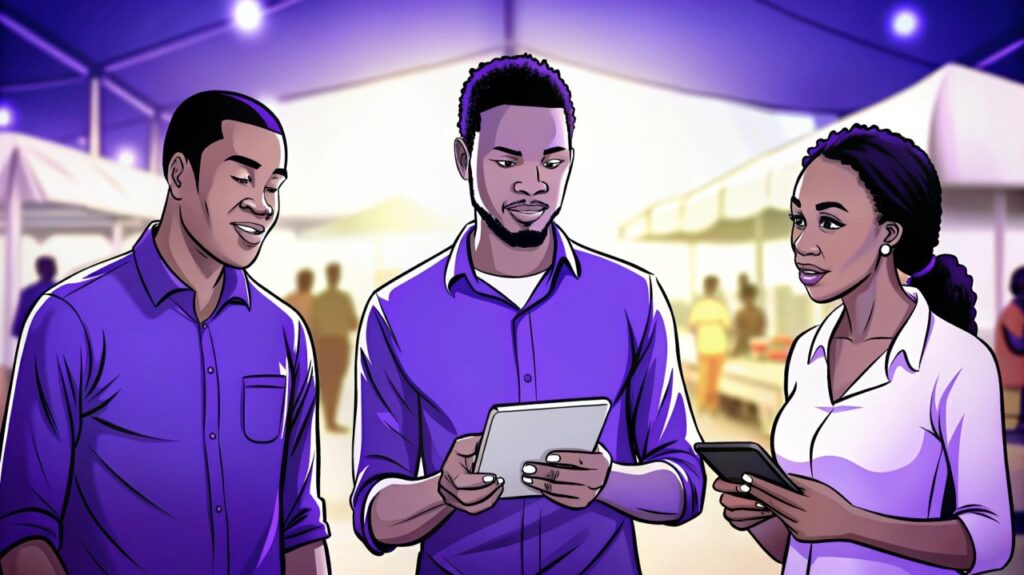
Africa is on the brink of a digital revolution. AI-driven solutions are transforming industries like agriculture, healthcare, and financial services. But there’s a catch—AI needs data, and Africa doesn’t have enough of it.
The problem isn’t that data doesn’t exist. It’s fragmented, inaccessible, and often unreliable. Rural farmers, informal businesses, and remote clinics generate valuable insights every day, but much of this information never makes it to the systems that need it. This is where distributed agent networks come in.
The Data Challenge
AI models require high-quality, localized data to function effectively. Without it, solutions are either biased, inaccurate, or simply don’t work. Take agriculture, for example. Farmers in Kenya and Nigeria need AI-driven weather predictions to optimize planting cycles. But if AI models rely only on global climate datasets, they miss hyper-local variations, leading to incorrect forecasts and losses for farmers.
Or consider healthcare. AI-powered diagnostics can help bridge Africa’s doctor shortage, but these models must be trained on real cases from African hospitals. Without enough diverse, local patient data, the accuracy of these systems suffers, putting lives at risk.
How Distributed Agent Networks Solve This
A distributed agent network is a system where field agents—either people or automated tools—collect and transmit data from different locations. These networks are powered by:
✅ Mobile technology: Agents use smartphones and tablets to record real-world observations.
✅ Offline data capture: Data is collected even in areas without internet access and synced later.
✅ Real-time syncing—When connectivity is available, data flows instantly to central AI models.
Imagine a network of community health workers using mobile apps to record disease symptoms in rural Uganda. Their reports feed into AI-driven health surveillance systems, which can then detect outbreaks faster than traditional methods.
Or picture small-scale retailers in Ghana submitting sales data through USSD codes, enabling fintech companies to assess their creditworthiness and offer better loans.
The Economic Impact
Distributed agent networks don’t just power AI—they unlock economic growth. Here’s how:
- Better AI models → Better decision-making – Governments and businesses can predict market trends, optimize supply chains, and improve services.
- Financial inclusion—More accurate data on small businesses means better lending opportunities and tailored financial products.
- Boosting agriculture—Farmers get localized insights on weather, soil health, and market prices, increasing yields and reducing losses.
- Healthcare improvements—AI-powered diagnostics and early disease detection save lives and reduce costs.
What’s Next?
At WeCollect, we’re building Africa’s first end-to-end data collection tool, enabling crowdsourced data to power AI and economic growth by making real-world data collection scalable, reliable, and accessible. From remote farmers to urban retailers, our platform enables individuals to contribute valuable insights that fuel smarter AI models and better decision-making.
Are you ready to be part of this transformation?
Let’s talk → https://demo.wecollect.tech/
Let’s build the future of AI together.