

In the small town of Gurusu, tucked near the city center of Minna in Niger State, a local nurse named Amina begins her Monday the same way every week. She steps into the local market just after 8 a.m., not to shop, but to observe. Her eyes scan the vegetable stalls, the dried fish stands, and the once-bustling yam corner that now sits half-stocked. She’s looking for patterns: what’s missing, what’s more expensive than last week, and who’s buying less.
Amina’s quiet work is part of something bigger. She’s contributing to a simple but powerful idea: that local data, when collected consistently, can act like a warning siren, sounding long before a nutrition crisis fully unfolds.
The Signs Before the Storm
Nearly 37% of Nigerian children under five suffer from chronic undernutrition.
In many parts of the country, the earliest signs of a food or nutrition crisis don’t come from reports or alerts. They come from people like Amina. Children grow slower than they should. Households switch from milk to bone meal. Pregnant women skip antenatal visits because there’s no transport fare for the 20km trip to the clinic. The signs are there, but too often, they’re not recorded in time. Or at all.
Nutrition Early Warning Systems (NEWS) are built to change this. They track small, local signals—food price hikes, clinical stock-outs, shifting diets—to help policymakers and aid groups respond early. But building these systems isn’t easy, especially in a country as large and diverse as Nigeria.
A two-month delay in detecting a food shortage in Sokoto could mean hundreds of children miss the window for effective intervention.
Why the Data Is Often Unreliable
One reason: methodology.
Too many nutrition systems still rely on sporadic surveys conducted by outsiders unfamiliar with the terrain. Others are entirely digital, SMS polls or app-based checklists that don’t capture context. In areas with low literacy or limited phone access, these methods miss too much.
Another reason: ownership.
When data collectors feel like outsiders or temporary hires, they rarely feel accountable. Without checks like GPS tagging, trend validation, or real-time monitoring, it becomes hard to separate real signals from rushed entries made to meet quotas.
What If We Flipped the Model?
Imagine this: trusted local actors like Amina, already embedded in their communities, are trained and equipped to capture nutrition data every week. They’re not asked to fill long forms, just structured, simple logs: food prices, school meal attendance, medicine stock-outs, and informal chatter.
Their reports are time-stamped, geo-tagged, and verified with anomaly detection built in. Then all that data flows into a central dashboard, giving state agencies, NGOs, and researchers a near-real-time snapshot of where problems are forming.
It doesn’t need satellites or drones. It needs a people-first model supported by a clear process and intuitive tools.
This is where WeCollect comes in.
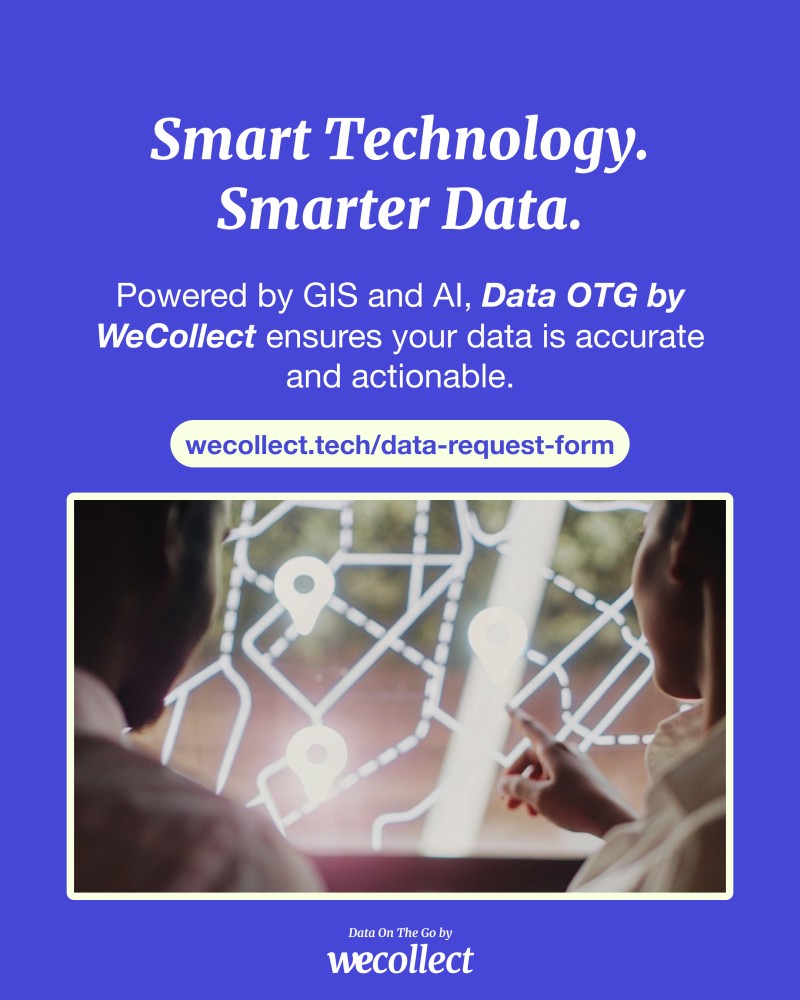
By working with a distributed network of trained field agents across all 774 LGAs, WeCollect helps organizations collect verified data within 72 hours, nutrition or otherwise. No long forms. No confusing dashboards. Just real insights from real people.
A Fictional Future We Can Build
Back in Gurusu, Amina notices a sudden spike in millet prices, a core protein source in her community. At the same time, her clinic has run out of iron supplements. She logs both observations.
Her data, along with inputs from hundreds of other contributors across Nigeria, is automatically checked, verified, and mapped.
The resulting view shows red flags forming, not just in Gurusu, but across 12 other towns in three different states. Within days, state health officers receive alerts, supplements are dispatched, and local awareness campaigns begin.
That’s how early warning systems work when they’re fast, local, and trusted.
So, Where Do We Start?
There’s no debate about whether this kind of system is needed.
The real question is: how soon can we build it and scale it responsibly?
WeCollect is helping fill that gap. Our tools and methodology are designed for real-world speed, clarity, and trust.
We’re not just offering a tool, we’re offering a system: one that’s already helping organizations collect structured, locally validated nutrition data, faster and more reliably than ever.
If you work in policy, food aid, field research, or health operations, and this speaks to the work you do, join us this August for our next Africa Data Conversation:
🗓️ “Implementing High-Fidelity Surveys for Food and Nutrition Data in Africa”
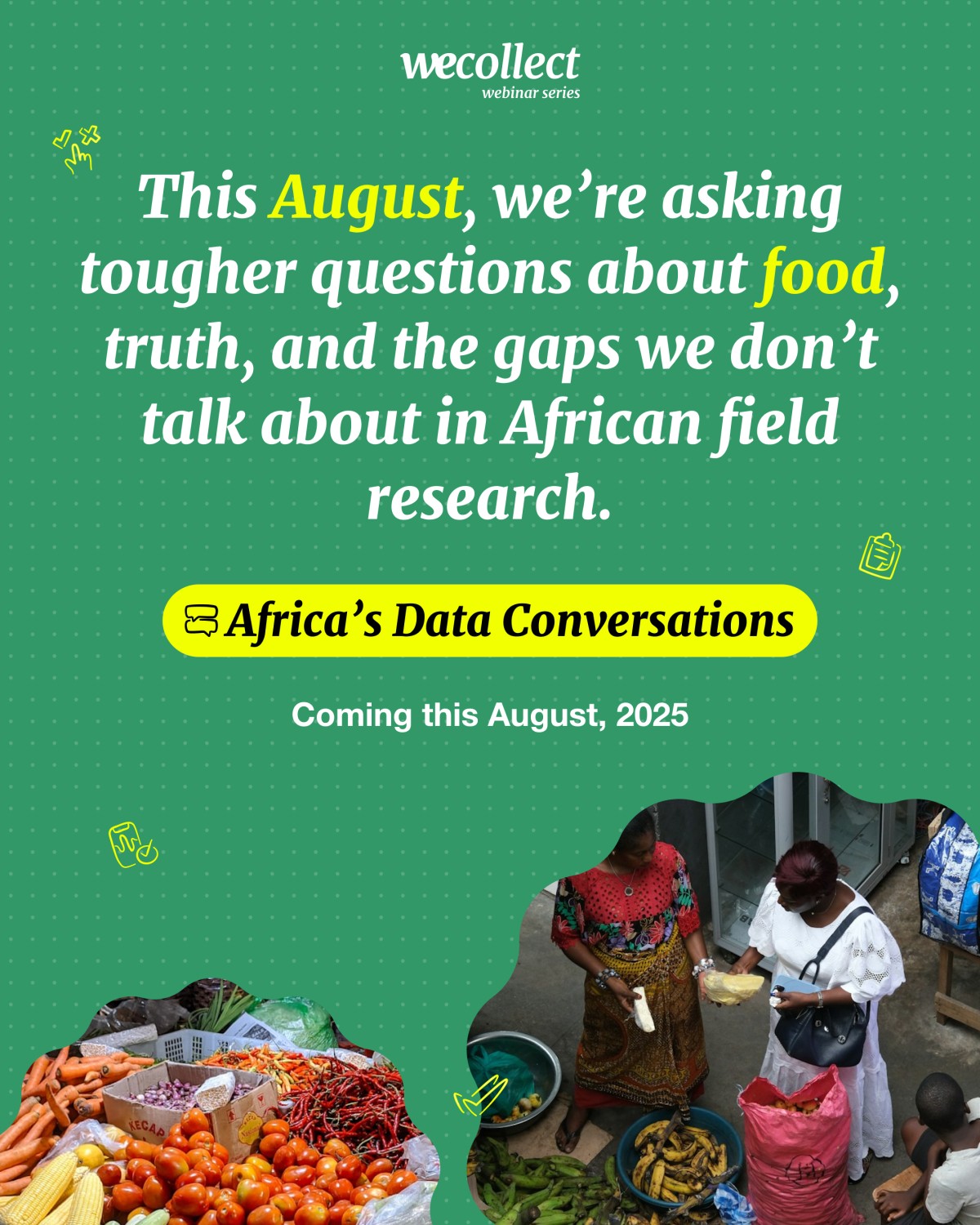
We’ll unpack field-tested methods, hear from practitioners, and explore how data can move from static reports to early, actionable signals.
Because when it comes to malnutrition, seeing the signs early can change