
In a continent where reliable data remains a luxury, it’s tempting to reach for what’s abundant—social media data. But is that wise? Is Africa, and Nigeria in particular, ready to treat what’s trending online as truth?
This is not to dismiss the value of social platforms; they’ve become indispensable tools for communication, civic movements, and public sentiment. We’ve seen firsthand how hashtags like #EndSARS sparked global attention and political urgency. But the question we all need to ask is: Can we truly rely on that data to inform policies, business decisions, or national statistics?
Spoiler: Not yet. And here’s why.
The Root Problem: We Still Don’t Have Good Data
Let’s be honest, Africa’s data systems are broken. Only 4% of countries produce Grade B or higher GDP data, and outdated methods ignore entire swaths of the informal economy. Businesses aren’t blind, they just don’t have enough to see with. Over half (52%) rely on gut instinct instead of accurate insights.
Startups? They’re stumbling too. I spoke to a founder recently who was struggling to raise funding because his market data was, in his words, “more guesses than ground.” That’s not a one-off. Since 2020, growth barriers for tech startups have risen 40%, often because investors can’t trust the numbers.
Meanwhile, the public sector can’t plan what it can’t map. Geospatial data is missing or outdated, making disaster response and agricultural planning a logistical nightmare. And while countries like Nigeria and South Africa are improving data protection laws, actual enforcement is weak and uneven.
The Danger of Listening Only to the Loudest Voices
Now, imagine a world where businesses, researchers, and governments turn to tweets and TikToks for insight. Sounds modern, right? But let’s pump the brakes.
Social media is now a primary news source for 39% of Africans. That’s huge. Platforms like Facebook are expected to hit 377 million African users by 2025. They’ve transformed politics, activism, and how we engage with public issues. But they’ve also unleashed a darker side.
Misinformation is rampant. A 2024 survey found that 80% of people consumed news from Facebook or TikTok. Most felt confident in spotting fake news, but research shows we’re often wrong. Worse, foreign-sponsored disinformation campaigns have quadrupled since 2022.
That’s not just a tech problem, it’s a governance problem. Regulations are patchy. While Nigeria and Kenya push for local data storage, many governments still manipulate data access or use it to surveil opposition. And good luck doing research: even in countries like South Africa, API restrictions limit how much social media data scholars can even study.
Infrastructure Gaps = Skewed Signals
Let’s talk about access. If we’re using social media to understand public sentiment, we need to remember that only 47% of Africans have internet access, compared to 70% globally. That number hides deep inequalities. Northern Africa is closer to 63%, while parts of Central Africa are far lower.
Most of Africa’s internet use is mobile-driven (73%), which makes sense, but 19% of Sub-Saharan Africa still lacks mobile network coverage. So whose voices are we hearing online?
If you’re basing decisions on hashtags and retweets, you might be missing the silent majority, the people offline, unconnected, and uncounted.
So, What’s the Alternative?
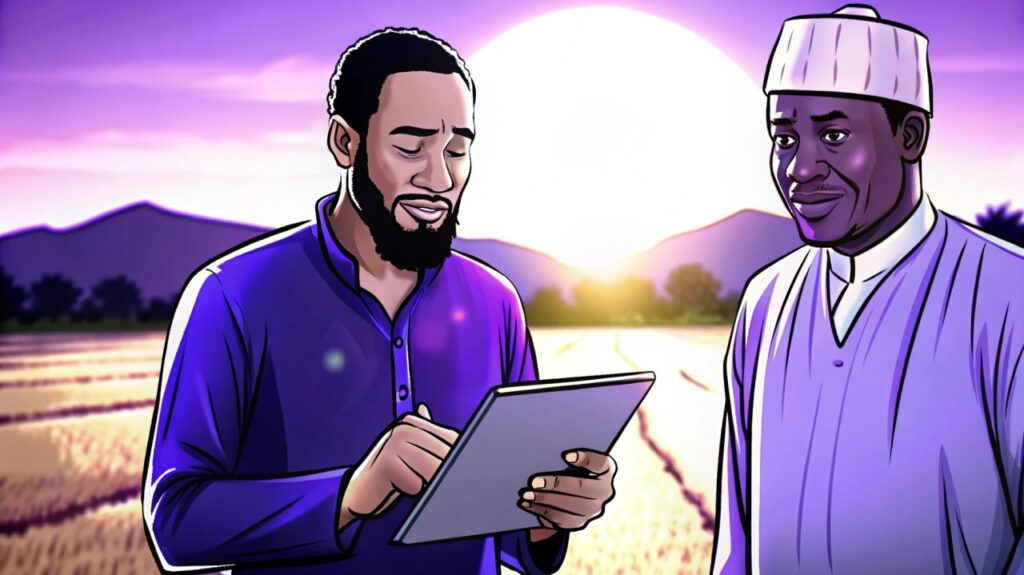
We need a better baseline. Africa needs hybrid data systems that combine digital insights with ground-level truth. That’s where tools like WeCollect come in, offering offline-first, GPS-tagged, real-time field data collection. You get insights that are inclusive, verifiable, and locally sourced, not just noise from the most vocal 10%.
You can’t govern from tweets or build products from retweets. With WeCollect, you’re not guessing, you’re seeing what’s happening on the ground.
And we’re not alone. Initiatives like Map Africa are working to give every nation free, high-res basemaps by 2030. The African Union is slowly aligning cross-border data rules. But these are long-term plays.
In the short term, businesses, governments, and researchers must invest in localized, community-driven data systems. Don’t just scrape Twitter. Hire agents. Run surveys. Talk to people. Mix online sentiment with on-ground realities. That’s how you build systems people can trust.
Final Thought: Data Can’t Be Democratic If Access Isn’t
Social media data can be part of the puzzle, but it can’t be the whole picture. Until Africa solves its foundational data issues, relying on likes and shares for truth is not just risky, it’s dangerous.
Let’s stop confusing what’s loud with what’s true. Let’s build data systems that reflect everyone, not just those with a smartphone and signal.
Want to stop guessing and start collecting real-world insights that move your business forward?
👉 Try a live demo of WeCollect at demo.wecollect.tech—no internet, no problem.